A Sunday in New Haven
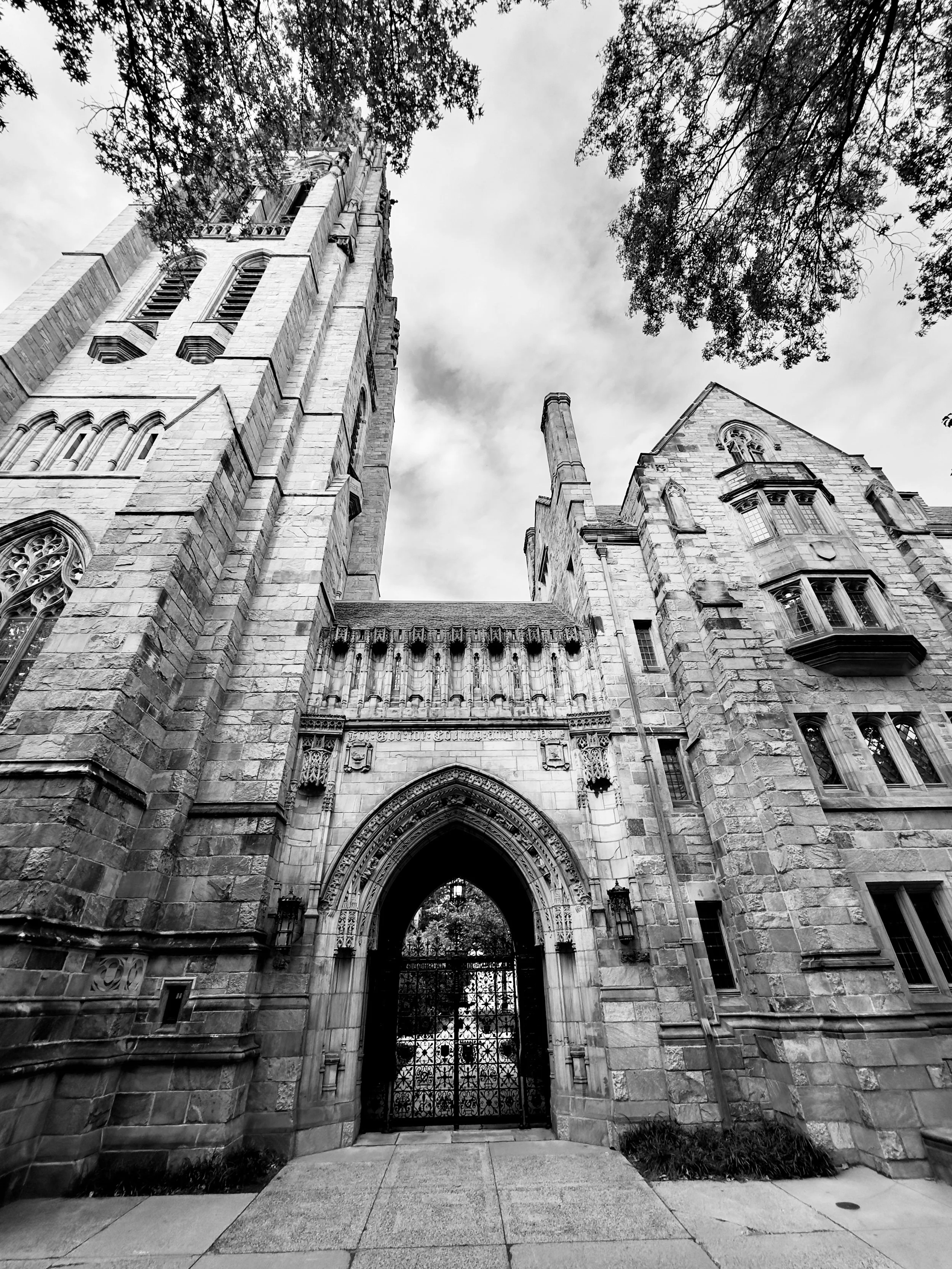
Yale University, credit Charles Carlini
The 6:30 Peter Pan bus pulled out of New York while the city was still deciding what kind of day it was going to have. I had a window seat, a cup of coffee, and no real plan beyond getting to New Haven. I was supposed to make the trip the week before, but a nor'easter got there first. I looked at the forecast, looked at the trip, and postponed it. There didn't seem much point in spending a Sunday getting blown around Connecticut under an umbrella. Lately I've been slipping out of the city on weekends like this. I take an early bus somewhere I've never been, or haven't seen in years, and go looking for old buildings, good museums, bookstores, and a decent meal. It's my way of reminding myself that there is still a world outside New York worth getting to know. By 8:30 I was at Union Station. The station was quiet, and a $5 Uber took me to Yale. The driver didn't say much, and neither did I. When I got out, I knew I'd been right to wait. A little mist still hung over the lawns, but above it the sky was bright blue, and the sun was breaking through. The grass was deep green, and the old stone buildings stood in the morning light as though they had been waiting there for centuries.
In a sense, they had. New Haven was founded by English Puritans in 1638, which makes it one of the oldest towns in America. They laid it out as a grid of nine squares, and the center one is still there as the New Haven Green. Yale was established in 1701 and settled here a few years later, so the university itself has been around for more than three centuries. You feel that English inheritance everywhere. Walking past the Gothic towers, arched gateways, and enclosed stone courtyards, I kept forgetting which side of the Atlantic I was on. Much of the campus was built deliberately in the image of Oxford and Cambridge, and it works. With the bells ringing and students in scarves cutting across the quadrangles, it felt less like Connecticut than a Sunday morning in an old English university town. Yale takes up a good deal of New Haven, and you see it everywhere: the stone buildings, the towers, the students with backpacks moving from one place to another. In some parts of town, the university seems less like an institution than a second city layered over the first. I found a cafe called Cafe Mathis and ordered a spinach omelette and black coffee. The coffee smelled wonderful. A couple of students talked at one table while someone nearby read a newspaper. The omelette was good, but the coffee was better. The museums didn't open until eleven, so I went looking for bookstores. I can spend an hour in a bookstore without feeling I've wasted it. I took books down from the shelves, read a few pages, and put them back. There are worse ways to wait. On the way back, I stopped at one of the churches on the Green. A service was going on, so I slipped inside and sat for a while. People were singing, and the light came through the windows. I didn't know anyone there, but nobody seemed to mind.
At eleven, I headed for the museums. Both were designed by Louis Kahn. The Yale University Art Gallery was one of his early commissions; the Yale Center for British Art was his last. They face each other across Chapel Street, so in a single afternoon you can walk from the beginning of a great architect's career to its end. The Center for British Art holds the largest collection of British art outside the United Kingdom. That's quite a claim, but after an hour in the galleries I believed it. There were portraits of people long dead, landscapes, paintings of rooms and houses, and objects that once belonged to people whose names have long since disappeared. Some paintings demanded your attention from across the room. Others made you step closer. After a morning among English-looking courtyards, it felt fitting to end up in a building full of England itself. And the building was beautiful. Kahn knew how to use light and space without letting the architecture overpower the art. The concrete, the proportions, the quiet of the galleries all seemed carefully considered. You could look at the building or at the paintings, and either way there was plenty to see. Across the street at the Art Gallery, the scale changed completely. There was ancient art, modern art, European painting, sculpture, and objects from places I have never been. I moved at my own pace, stopping when something caught my eye and sometimes standing before a painting for several minutes. I found myself thinking of the museums back home: the Met, the Frick, and the others I've visited many times. Here was a collection of extraordinary depth in a city a fraction of New York's size. And admission to both museums was free.
From the museums I made my way to two of Yale's great libraries, Sterling Memorial and the Beinecke Rare Book and Manuscript Library. Sterling is the kind of library that makes you lower your voice without being asked. From the outside it looks like a cathedral, and the feeling continues inside: high ceilings, carved stone, stained glass, dark wood, and long corridors that seem to lead somewhere important. If any building on campus could pass for Oxford, it's this one. For a moment you half expect to see monks, or someone carrying a manuscript under his arm. Instead, there were students, sitting at long tables with laptops open, reading and writing. Everyone seemed to know where they were going. I walked through quietly, aware that this was not a museum but a place where people actually came to work.
The Beinecke is something else altogether. Its exterior is severe, almost mysterious, built from great panels of translucent marble that let the daylight in. From a distance, it looks less like a library than an enormous piece of modern sculpture. Inside, a glass tower of books rises through the center of the building. Thousands of volumes stand visible behind the glass, and the light filtering through the marble gives the room a strange, soft glow. It doesn't feel like a place built merely to store books. It makes you think about what books are.
I stood there a long time. So many lives had gone into writing them, printing them, collecting them, and reading them. Centuries of argument and imagination were sitting behind that glass. A book is a strange thing: someone writes it, someone prints it, someone buys it, and then it may sit on a shelf for fifty years unopened. Or someone may find it a century later and discover exactly what they needed.
By then I had lost track of time. That's what happens when you spend a day moving between museums and libraries. You look at a painting, then a sculpture, then an old book, and suddenly an hour is gone. Outside, the sun was still shining. Students crossed the courtyards, people sat on benches, and the lawns looked almost impossibly green in the afternoon light. For a place so steeped in tradition, Yale seemed remarkably open to a stranger simply wandering through and looking. I had walked miles, and my feet were starting to say so. Two museums, two remarkable libraries, a few bookstores, breakfast, part of a church service. It had been a full day without ever feeling planned. That's what I like about these trips. You get on a bus early, go somewhere you've wanted to see, walk around, eat something, and look at things. After a while, the day belongs to you.
I thought about the storm the week before. If I'd gone then, I would have been wet and cold and hurried through everything just to get back inside. Instead I'd had a perfect October day: blue sky, green lawns, good coffee, great art, and a town nearly four centuries old that still looks, in places, like a corner of England. New Haven is close enough to New York for an easy day trip, yet it feels far enough away to give you some distance from the city. I would do it again. There are plenty of other places within reach with old buildings, libraries, museums, and stories worth discovering.
On the ride back, I sat by the window. I didn't read or look at my phone. I watched the road and thought about the day. Sometimes that's enough. You go somewhere, see a few things worth seeing, and come home tired, with nothing much to report except that it was a good day.