The World Is Divided Into People Who Litter and People Who Don't
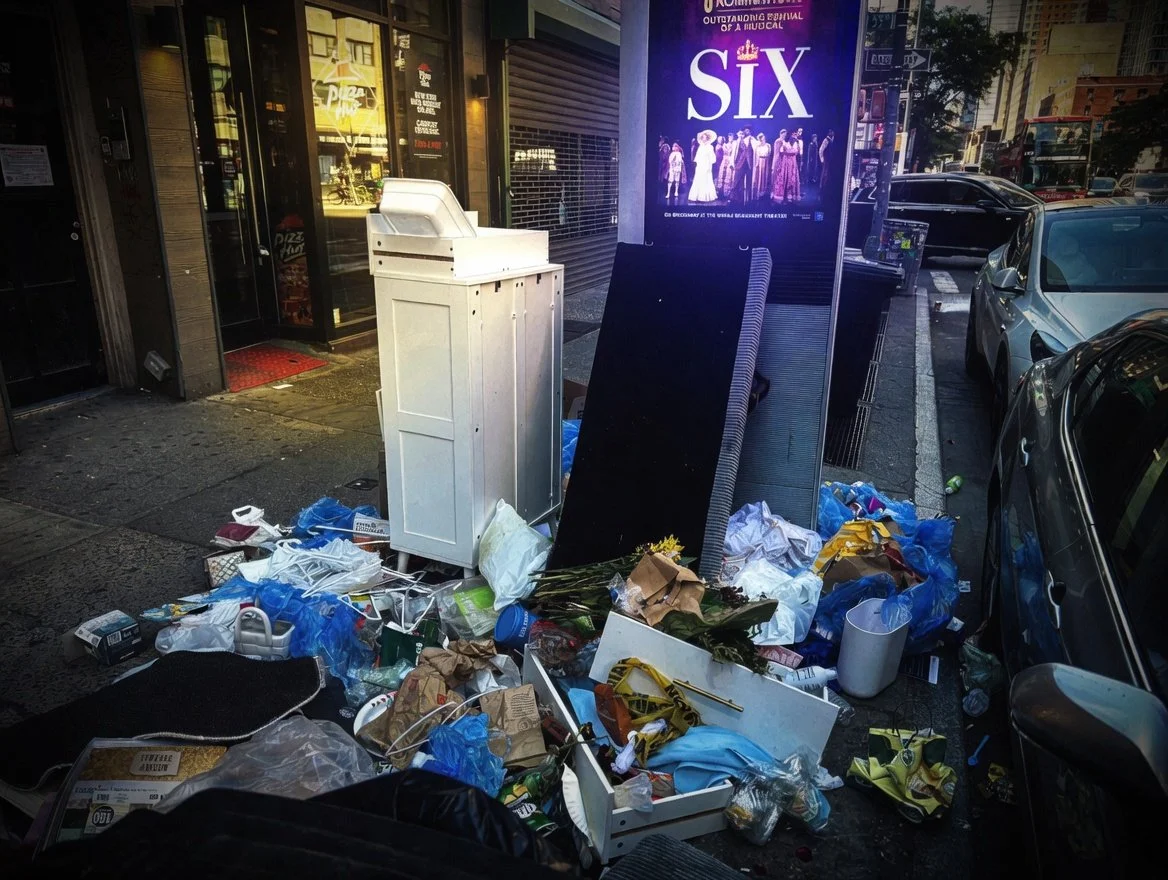
Today I walked a few blocks to grab breakfast and had to navigate what can only be described as the aftermath of a nuclear event. Trash bags split at the seams. Soaked pizza boxes. Chicken bones. Broken glass. All of it spread across the sidewalk like a disaster no one felt responsible for cleaning up. A biker blew through a red light. A delivery truck sat parked on the crosswalk. Nobody flinched. Just another morning in New York City.
You don't see this in Germany. Or Japan. Or pretty much anywhere in Northern Europe. The streets there are clean, not just because of better sanitation services, but because people simply don't make them dirty in the first place. Pedestrians wait at a red light even when no car is coming for half a mile. Cyclists stay in their lane. There's an unspoken agreement that public space is shared space, and you treat it accordingly.
Freakonomics covered research on exactly this difference, what social scientists call "tight" versus "loose" cultures. Tight cultures, like Germany, Japan, and Singapore, have strong social norms and low tolerance for breaking them. It's not that there are more police. It's that the social pressure to follow the rules is so ingrained that most people don't even think about breaking them. Littering in Tokyo doesn't just risk a fine—it risks the silent, devastating judgment of everyone around you.
Loose cultures—and the United States is the textbook example—are the opposite. Norms exist, but they're more like suggestions. There's a higher tolerance for people doing their own thing, even when their own thing inconveniences everyone else. Some of that is baked into American DNA: the country was built by people who rejected authority and pushed west into open space. Rules were never really the point.
The tradeoff is real. Tight cultures are great at collective action, masking up during a pandemic, keeping a city clean, following traffic laws even when no one's watching. Loose cultures tend to be more creative, more entrepreneurial, more willing to bend rules in ways that occasionally produce something brilliant. New York is chaotic precisely because it tolerates the kind of rule-breaking that also built half the companies and artforms the world now copies.
But knowing all that doesn't make a Sunday morning walk through garbage any more pleasant. I found my coffee, stepped around a very committed pigeon, and headed home. Tokyo, I kept thinking. Tokyo has the edge on this one.